
Similar Posts
Quobis’ corporate social responsibility strategy during COVID-19 pandemic
Care, trust and independence are our core values. But it worth nothing without a behabour that cultivate them permanently. Here another example how our independence let us to react very fast in order to help society by help our clients to frictionless adapted to the new reality, more linked than ever before with real time communications challenges. Why Quobis…
Quobis announces its participation in the WebRTC Expo and Conference as Gold Sponsor
Quobis announces its participation in the WebRTC Expo and Conference as Gold Sponsor. This event will be held at the JW Marriott Marquis Miami (FL) on May 12-14, 2015. The newest features and functionalities of Sippo will be showcased there. Quobis works in the WebRTC client applications domain, building web-based communication tools for service providers…
Ten use cases for WebRTC in telcos (1/2)
Tier-1 and Tier-2 telcos have been involved in rollouts of IMS, VoLTE, NGN, RCS and Joyn services during the last few years. These telcos have detected some market opportunities for WebRTC services with real business models, which may be summarized as follows. Residential Web clients Allow end users to adopt a light WebRTC client to…
Recordings of the WebRTC meetup in Barcelona
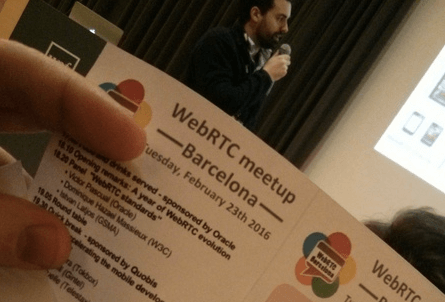
Thanks for attending the WebRTC meetup. We had 454 WebRTCers and 166 attendees at the meetup. Here are the recordings of the event: Part 1: Part 2:
Stories behind our new headquarters
All the places have a history behind and this is the case of our new headquarters. We are lucky because the place is wonderful and full of stories worth sharing, so visitors are really enjoying it. BEGINNINGS The building was part of “Granxa do Louro” (farms of the river Louro), that was created in 1935…
Buy vs build dilemma with Sippo
Sippo is the name of a WebRTC product family authored by Quobis which includes the following products: Sippo WebRTC Application Controller (or Sippo WAC): the server which provides the services. Sippo WebRTC Apps: reference web applications which leverage the main features provided why the WAC. Two current application available: Sippo Web Collaborator: Reference enterprise WebRTC…