

Post-incident, evidence-driven and independent
After a serious voice incident, the root cause is rarely obvious. Evidence is scattered across SBCs, carriers, internal platforms and network layers — and each system tells only part of the story.
Quobis provides independent, forensic-grade analysis to reconstruct the full picture and help all parties move from uncertainty to clarity.
When do you need Independent Audit Trail Analysis?
This service is designed for post-incident situations where the organization needs to understand the facts, validate supplier explanations or prepare a technically solid escalation.
Major voice outage
Mass call failures, routing collapse, SIP interconnection failures or prolonged unavailability.
Voice fraud post-mortem
IRSF, wangiri, toll fraud, spoofing, account abuse or suspicious traffic patterns.
Multi-party incident
When multiple systems and stakeholders are involved — including security, encryption or access-related events — and an independent technical view is needed to move forward.
Quality crisis
Severe jitter, packet loss, latency or MOS deterioration with unclear ownership.
Microsoft Teams / Direct Routing incident
Call routing failures, SBC misconfigurations, Media Bypass issues or quality degradation in Teams voice environments with SIP trunk interconnection.
Compliance follow-up
Technical evidence and timeline reconstruction for NIS2, DORA, ENS, GDPR or internal governance.
What Quobis analyzes
Every incident is different. Quobis adapts the scope of analysis to the specific event, selecting from areas such as:
Signaling and call flow
SIP dialogs, response codes, routing behavior and session lifecycle.
Session border controllers
Policy decisions, security handling and cluster behavior.
Call records and metadata
What was attempted, established, billed or rejected.
Microsoft Teams / Direct Routing
Call flow analysis, SBC-to-Teams signaling and trunk interconnection.
Media and quality of service
Packet loss, jitter, latency and media path behavior.
Security and access
Authentication events, encryption handling and unauthorized access indicators.
Carrier and interconnection
Trunk behavior, peering points and upstream operator evidence.
Configuration and change history
Correlation of failures with recent modifications, rollbacks or failover behavior across infrastructure components.
Grounded in the Quobis Voice Security Framework
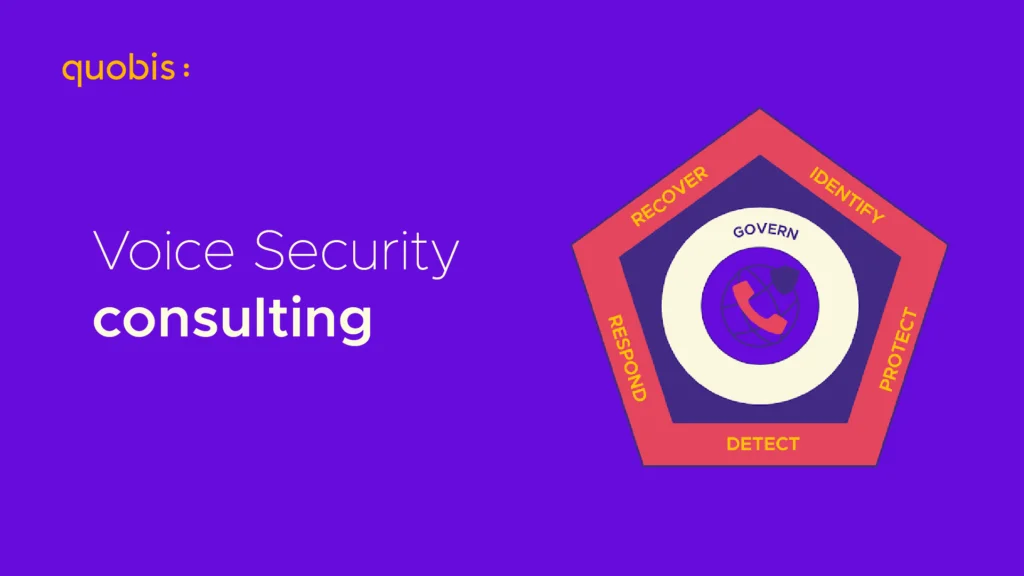
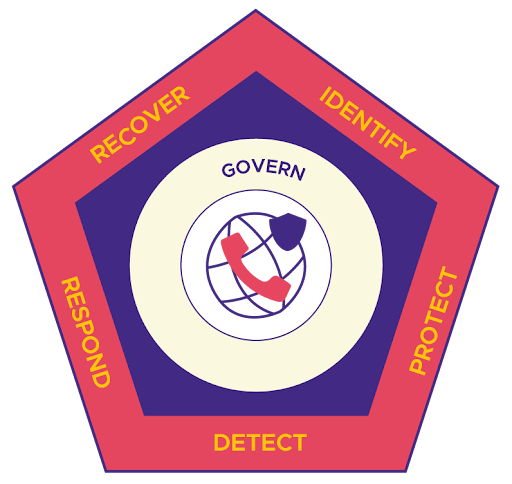
While the Quobis Voice Security Consulting and Voice Security Assessment services focus on prevention and readiness, Independent Audit Trail Analysis addresses what happens after an incident — specifically the Recover function of the NIST Cybersecurity Framework 2.0, including incident analysis and post-incident improvements.
Incident Analysis
Determining if a disruption was caused by an active attack, a software defect or an infrastructure misconfiguration.
Improvements
Ensuring that the same vulnerability or infrastructure weakness cannot be exploited again.
How the audit works
This approach is especially valuable when the incident spans multiple domains and no single party has the full picture.
Incident framing
Define the event, affected services, systems involved and initial hypotheses.
Evidence collection
Gather traces, logs, CDRs, architecture context, change records and timeline references.
Technical reconstruction
Rebuild the sequence of events across signaling, media, routing and platform layers.
Correlation and validation
Compare records from different systems to confirm or discard hypotheses.
Root cause conclusion
Identify the most probable failure mechanism and contributing factors.
Technical opinion and remediation guidance
Document findings, clarify responsibilities and propose immediate corrective actions.
Typical forensic cases
SIP signaling outage
An organization experiences a major call failure after an interconnection change. Quobis analyzes signaling traces, SBC logs and carrier records to identify where the chain broke, whether the issue originated at the enterprise edge, the operator interconnect or a recent configuration change.
Voice fraud post-mortem
After abnormal international traffic and unexpected billing, Quobis reconstructs the fraud sequence using call records, authentication events and system logs. The analysis identifies the likely access vector, the controls that failed and the immediate actions required to contain recurrence.
QoS degradation with unclear ownership
Users report severe voice quality deterioration, but each party points elsewhere. Quobis correlates media quality metrics, system behavior, network events and timing data to determine whether the root cause is capacity, configuration, carrier impairment or a security-related event.
Knowledge of the complete value chain.