

Standard IT audits rarely cover voice
Without a dedicated assessment, these risks remain invisible until they cause a service disruption, a compliance gap or a financial loss.
Voice networks are exposed to risks that generic IT assessments often miss: SIP scanning, toll fraud, caller ID spoofing, SBC misconfiguration, weak TLS/SRTP coverage, degraded QoS under attack, carrier dependency, cloud telephony integrations and AI-enabled vishing or deepfake scenarios.
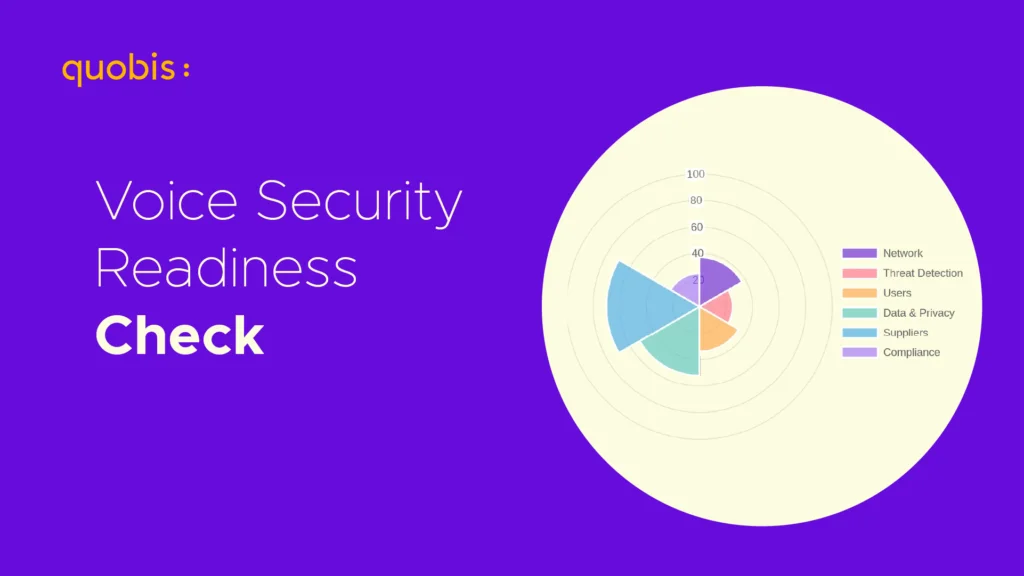
A Voice Security Assessment gives technical and executive teams a clear picture of where the organization stands, which risks matter most and what can be improved immediately.
When do you need a voice security assessment?
New provider evaluation
Validate a SIP Trunk, carrier, UCaaS or Contact Center platform before it reaches production.
SBC hardening
Confirm that current SBC configurations resist known attacks and follow best practices.
AI-enabled fraud exposure
Test exposure to spoofing, vishing, deepfake voice and automated fraud scenarios.
Regulatory readiness
Identify gaps against NIS2, DORA, GDPR, ENS, CRA or ISO 27001.
Planned periodic review
Update the voice security scorecard, review new CVEs and verify previous fixes.
Migration or transformation
Assess security posture before and after PBX-to-Teams, legacy-to-cloud or carrier consolidation.
Built on the Quobis Voice Security Framework
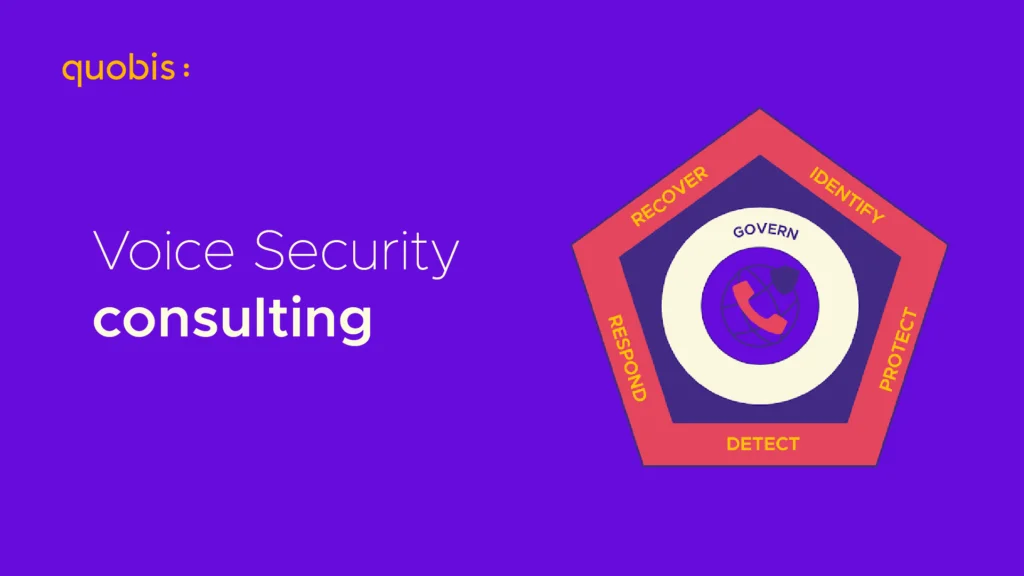
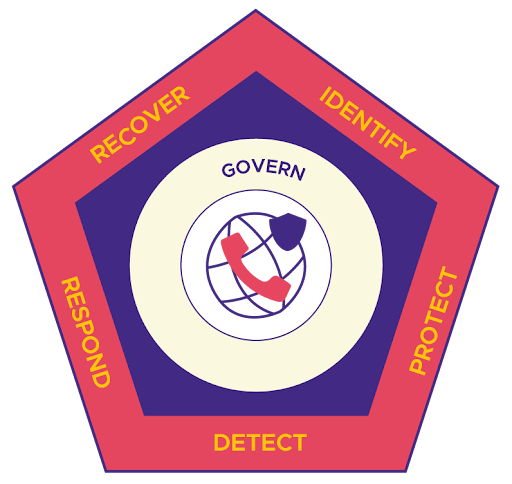
The assessment applies the Quobis Voice Security Framework in a tactical and bounded way. It uses NIST CSF 2.0 as a foundation and adapts it to real-time communications, where availability and QoS are part of the security posture.
The objective is to discover, validate, measure and recommend.
What does a voice security audit cover?
The scope is adapted to each client, but a typical audit focuses on four areas:
Infrastructure & configuration
Review the technical foundation of your voice environment — from SBC rules and encryption to architecture design and service resilience. The goal is to identify misconfigurations, exposure points and gaps in the controls that protect signaling, media and continuity.
Threats & fraud
Evaluate real-world exposure to voice-specific attack scenarios — including toll fraud, spoofing, vishing and AI-driven threats. This area combines risk analysis with controlled, targeted tests to understand how the environment would respond to likely abuse patterns.
Operations & visibility
Assess whether monitoring, logging and alerting capabilities provide enough visibility to detect anomalies, fraud indicators and service degradation in time. This category focuses on operational blind spots that can delay incident detection and response.
Compliance & governance
Map the current voice security posture against the regulatory and governance expectations that apply to the organization. The audit highlights priority gaps and helps translate technical findings into compliance, risk and management actions.
How we turn your challenge into a clear path forward
We understand your challenge
Whether it’s a new provider, a compliance deadline or a fraud concern, we start by defining the scope and success criteria around your specific scenario.
We gather the evidence
Configurations, architecture diagrams, traffic profiles and operational context — collected collaboratively, not in a black box.
We put it to the test
Controlled analysis and targeted testing to surface what’s actually vulnerable, misconfigured or exposed.
We separate noise from real risk
Findings mapped to business impact, so you know what matters most — not just what’s technically broken.
We hand you a clear path forward
Quick wins you can act on today, remediation priorities for what’s next, and honest guidance on where to go from here.
voice security assessment
Ready to turn your challenge into a plan?
Prevent and validate
Whether you are connecting a new provider, preparing for compliance, reviewing SBC hardening, planning a migration or validating exposure to voice fraud, Quobis can help you measure the real risk and prioritize the next actions.
Explore Quobis Security & Trust solutions