

Voice security is not just about technology.
Configurations degrade, threats evolve, and incidents are resolved under pressure—often within minutes. Those who operate, manage, and use voice services must know how to recognize channel-specific risks, from telecom fraud and spoofing to deepfake-enabled vishing.
Most awareness programs leave out real-time communications. But in voice, a poor operational decision can expose a fraud route, bring down a critical service, or delay incident response that needs to be contained in minutes.
Quobis designs voice-specialized training and awareness programs tailored to every role: technical teams, security leads, executive leadership, and end users. Role-specific training teaches each profile which signals to monitor, what actions to take, and who to coordinate with.
Our programs cover the risks generic training overlooks.
When do you need voice security training?
There are moments when preparing your teams makes the difference between a minor scare and a full-scale crisis.
methodology
Quobis Voice Security Framework
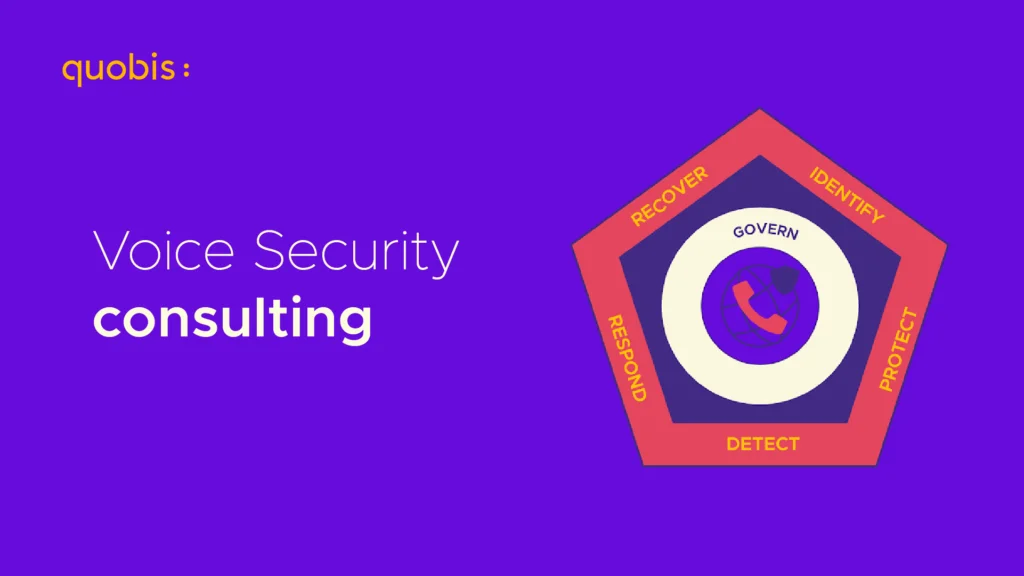
Our programs follow the Quobis Voice Security Framework, an approach anchored in NIST CSF 2.0 and tailored for voice, SIP, and real-time communications.
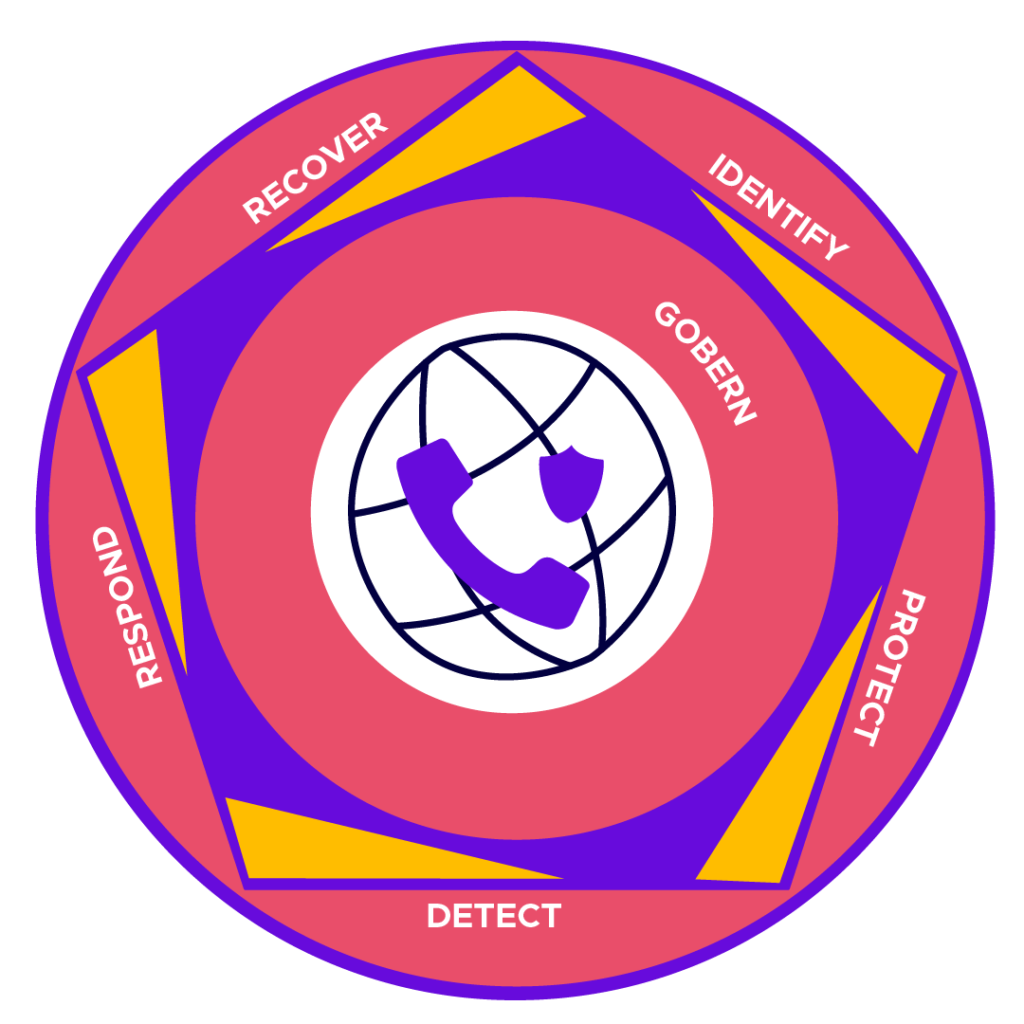
Govern
Clarify roles, risk appetites, compliance mandates, and executive decision-making across critical voice services.
Identify
Teams inventory their voice assets (SIP trunks, SBCs, routing paths, and carriers) and map relevant threats.
Protect
Technical controls, anti-fraud mechanisms, and operational procedures are properly and consistently enforced.
Detect
Teams spot SIP traffic anomalies, CDR irregularities, voice quality degradation, and early indicators of fraud.
Respond
Teams act swiftly, escalate accurately, preserve evidence, and coordinate with carriers and vendors.
Recover
Every incident translates into actionable lessons learned and updated operational playbooks.
Training is NOT optional
European regulations already treat cybersecurity as a board-level responsibility and mandate periodic training across teams. Yet most programs omit voice. We map these regulatory requirements onto real-time communications, ensuring your organization stays compliant across the channel attackers target most for deception.
NIS2
Leadership must approve and oversee cybersecurity measures and undergo mandatory training.
DORA
Mandatory operational resilience training across all staff, including executive management.
ENS
Periodic staff training and awareness, proportional to system security categorization.
In addition, voice security training generates audit-ready compliance evidence for GDPR and ISO 27001: validating due diligence, organizational control, and continuous improvement in safeguarding voice traffic data.
Each role faces distinct threats and makes different operational decisions.
Leadership, CISO & Risk Executives
- Integrate voice risks seamlessly into the organization’s cybersecurity roadmap.
- Ensure NIS2, DORA, and ENS compliance across voice systems, generating audit proof for GDPR and ISO 27001.
- Govern telecom carriers and vendors through defined SLAs, security KPIs, and continuity plans.
- Prioritize security investments based on quantified risk exposure.
Operations & Security Teams (NOC / SOC)
- Operate SBCs and enterprise voice platforms securely.
- Detect anomalies across CDRs, SIP signaling, and call traffic patterns.
- Execute clear response runbooks for toll fraud, TDoS, caller ID spoofing, and QoS degradation.
- Escalate efficiently, safeguard digital forensic evidence, and interface effectively with carriers.
Engineering & Architecture
- Pinpoint core vulnerabilities across voice, SIP, WebRTC, and telco ecosystems.
- Harden SBCs: TLS/SRTP encryption, network segmentation, topology hiding, and route filtering.
- Architect resilient multi-carrier, multi-datastore infrastructures with automated failover plans.
- Secure Microsoft Teams Direct Routing, UCaaS platforms, contact centers, and hybrid topologies.
End Users & Contact Center Agents
- Identify vishing, deepfake voices, impersonation, and psychological manipulation techniques.
- Verify caller identity and report suspicious communications immediately.
- Respond safely to fraudulent calls, robocalls, and telephony channel abuse.
- Safeguard sensitive and personal data during every conversation.
Formats tailored to every team
We tailor training delivery models based on target roles, starting maturity levels, and specific program goals. Available both on-site and via live interactive remote sessions.
Intensive Workshops
Focused working sessions for technical engineers, security leaders, or executive management.
Hands-on Labs
Technical teams analyze real SIP traces, examine CDR patterns, inspect configurations, and rehearse incident response step by step.
Tabletop Incident Simulations
Leadership and technical units test crisis decision-making against toll fraud, compromised SBCs, TDoS attacks, or NIS2/DORA regulatory audits.
Company-Wide Awareness
Concise, practical micro-learning modules for end users, contact center agents, and non-technical staff featuring real-world vishing and AI-cloned voice samples.
Lessons-Learned Sessions
Following an incident, we review root causes, update operational procedures, and systematically close security gaps.
How we transform knowledge into operational readiness
Needs Assessment
We evaluate your voice infrastructure, key roles, baseline skill sets, and compliance mandates.
Together, we define a skills matrix and target learning objectives for every role.
Tailored Design
We customize every module around your tech stack, threat model, and industry-specific use cases.
You receive a custom program built for your architecture, not an off-the-shelf course.
Delivery
We combine the most effective formats for each audience: interactive workshops, tabletop simulations, technical labs, and awareness tracks.
As a result, your teams rehearse high-pressure real scenarios before ever facing them in production.
Evaluation & Improvement
We measure skill retention, collect participant feedback, and identify next steps.
You receive an audit-ready compliance package—attendance logs, curriculum syllabus, evaluation metrics, and mapping to NIS2, DORA, and ENS—along with certificates of completion and a continuous improvement roadmap.
Voice security training delivered by engineers who design, deploy, and operate carrier-grade voice networks and platforms.
- Real-world voice expertise: telecommunications, SIP, SBCs, WebRTC, UCaaS, and contact centers. Your teams learn directly from production architectures and live field scenarios.
- Active, present-day threats: toll fraud, caller ID spoofing, vishing, deepfakes, TDoS, and interconnect abuse. Teams practice against actual threats rather than theoretical slides.
- Vendor-agnostic approach: we are entirely independent of proprietary hardware manufacturers. Our training applies universally across multi-vendor and hybrid environments.
- Recognized framework: built on NIST CSF 2.0 via the Quobis Voice Security Framework and aligned with European regulatory standards.
- European digital sovereignty: operating under European Union jurisdiction with extensive experience supporting highly regulated industries.

For organizations where voice is critical infrastructure
20 years of telecommunications engineering
Voice security training is no longer optional.
Prepare your teams before an incident tests your communications
Regulations mandate it and threat actors are already exploiting it. NIS2, DORA, and ENS require regular training for leadership and technical teams, while voice-targeted fraud increasingly focuses on exploiting humans.
Tell us about your voice architecture and the teams you want to train. We will design a custom program with role-specific objectives and audit-ready documentation.
Discover other security solutions from Quobis.