Zoom Phone and SIP interconnection

As with Microsoft Teams, Zoom has a voice traffic-oriented collaboration tool called Zoom Phone, which complements Zoom Meetings and Rooms, which became so popular in the midst of the pandemic. UCaaS models are becoming established as a way to have greater flexibility and scalability.

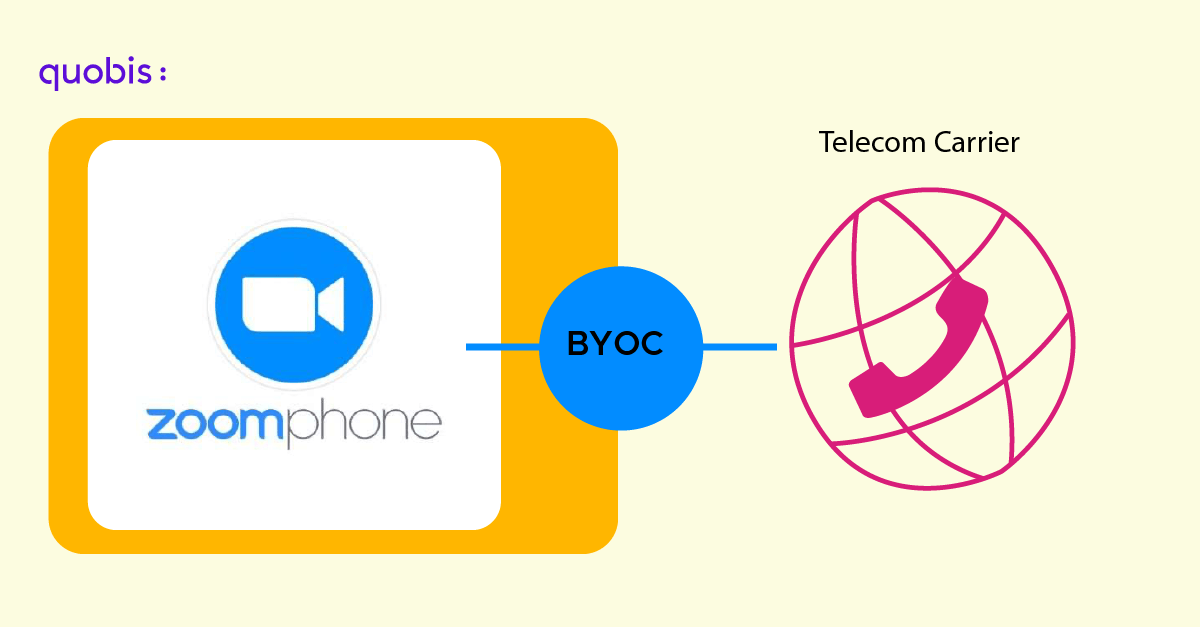
With Zoom’s Bring Your Own Carrier (BYOC) feature , current PSTN service providers can be maintained by redirecting existing voice circuits to the Zoom Phone cloud, allowing you to keep your current numbering and not suffer early termination penalties . Additionally, Zoom supports, like Microsoft, its own calling plans with Zoom Calling Plans in certain countries.

In the case of bringing the SIP trunk with the existing operator, we have the option of doing it through the Internet or with a dedicated link. In the first case, it is a simpler and faster migration, with lower network operating costs. In the case of using a dedicated link, there is a gain in available bandwidth for voice, greater security, reliability and quality of service.

The SBCs approved by Zoom to make the SIP interconnection are Oracle (from version 8.4, both physical and virtualized), Ribbon hardware (from version 8.1.0) and virtualized (from 8.1.5) and Audiocodes (from 7.40A.250- 262)

Quobis, as an authorized partner of Zoom and of the main manufacturers of SBCs, helps in the processes of prior consulting, service migration, corrective support and service operation, while maintaining low prices.


Similar Posts

  • Keeping independence scaling without investors

    A few months ago, I started to write my master’s thesis about the question whether and how it is possible for small companies to scale without investors. This question is relevant for us at Quobis because we firmly believe in the advantages of staying independent, such as putting all our focus on our customers and our…

  • |

    How to combat telephone fraud with CAMARA APIs: Quobis’ proposal at MWC26

    Phone fraud and spoofing have become one of the biggest challenges for network operators and businesses in 2026. In this context, Quobis returns to Mobile World Congress (MWC26) to present a disruptive solution: the integration of Quobis Caller Score with the CAMARA project’s network APIs. If you’re attending the congress in Barcelona, ​​we invite you…

  • Skype on the web: reality check

    The recent announcement by Skype “Please Welcome Skype for web (beta)” has initiated a tsunami of comments in the WebRTC community. As an example, we have received several questions from partners, customers and prospects about the reality behind this announcement, trying to understand if they should reconsider their WebRTC projects and strategies and wait for…

  • Quobis sponsors Cans Festival

    Some years ago we published a post where we compared Galicia, the Spanish región where Quobis is based to California (US) using the recently coined term “Galifornia”. Come to Galifornia, Galician California One of the points we compared is “Festival de Cans”. Cans Festival is celebrated every year in the small village of Cans, which…

  • Building a Social TV use case with Sippo

    by iago.soto | Sippo enables different use cases of web communications like Social TV. Imagine you want to watch together with your friends a football match. Sippo includes features like group chat, push notifications, multi-conferencing and multi-device Support that make Social TV possible. Using Sippo Web Collaborator you can chat with your friends using any…

  • Genband and Quobis to collaborate to bring WebRTC capabilities to service provider market

    Newly integrated WebRTC solutions already allowing service providers to introduce new applications on wide range of devices, browsers and network environments Frisco, Texas, and Vigo, Spain, November 12, 2014 – GENBAND™, a leading developer of real time communications software solutions, today announced it is collaborating with QUOBIS, a leading provider of carrier-class unified communications solutions,…