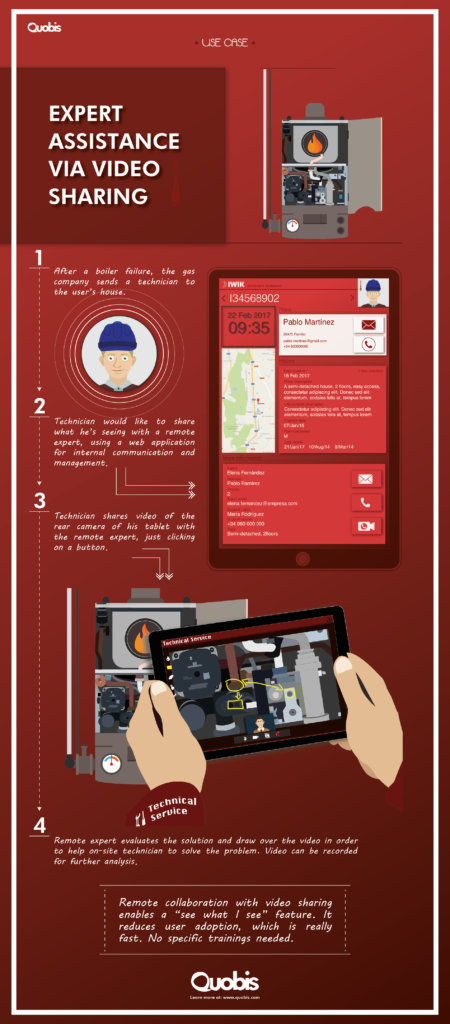
Expert assistance via video sharing



by iago.soto | We were exhibiting at the MWC Shanghai last week, the Asian edition of the GSMA MWC Barcelona, organised . This was the first edition of the summit, previously called Mobile Asia Expo. We had a booth at the Mobile World Capital Barcelona, the public institution that tries to boost Barcelona as a…
In this 30 minutes talk, Alcatel-Lucent and CloudBand™ Ecosystem Program member Quobis® showcase Sippo™ — a resilient cloud-based unified communications (UC) application. The proof of concept shows Sippo linking into Alcatel-Lucent vIMS securely and automatically during the deployment process with CloudBand, and interconnecting Consumer & Business VoIP, Enterprise UC, and Voice over LTE (VoLTE) endpoints….
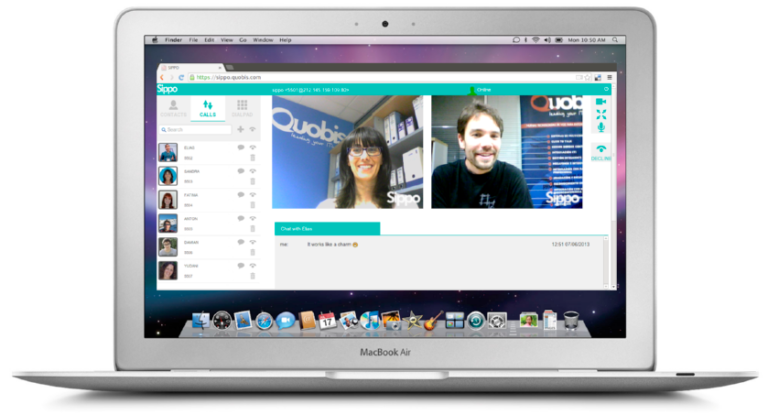
Quobis®, the leader in WebRTC applications for corporate users, today announced that its WebRTC enterprise endpoint “Sippo WebCollaborator” is in general availability for the public. Quobis’ Sippo Web Collaborator is a web-based UC client that includes voice, video, presence, file transfer and desktop sharing capabilities. When combined with leading WebRTC gateway vendors, SIPPO showcases how existing UC…

by iago.soto | Sippo enables different use cases of web communications like Social TV. Imagine you want to watch together with your friends a football match. Sippo includes features like group chat, push notifications, multi-conferencing and multi-device Support that make Social TV possible. Using Sippo Web Collaborator you can chat with your friends using any…

Vigo (Spain), December 20, 2012. – QUOBIS (www.quobis.com ) announces the public release of QoffeeSIP, a full SIP stack for WebRTC applications. QoffeeSIP enables the creation of video & voice applications over the web and, in a short future, the connection of browsers to any SIP enabled device. WebRTC, HTML5 and this stack open up new…
This version of Sippo WebRTC Application Controller advances on scalability and robustness without stop launching new features. It includes functionalities such as abstraction for MCU or SFU integration for recording and static rooms, room events storage or SMS backend. It also improves the HA and scaling architecture, the user internal architecture and the token-based authentication….
Oracle
Ribbon
Audiocodes
AWS

