Webinar: “15 WebRTC-based applications for telcos”
Thursday, June 2nd, 2016, Iago Soto, Quobis CMO, was speaking about WebRTC use cases for telcos and the business models behind.
PROGRAM
Thursday, June 2nd, 2016, Iago Soto, Quobis CMO, was speaking about WebRTC use cases for telcos and the business models behind.
PROGRAM
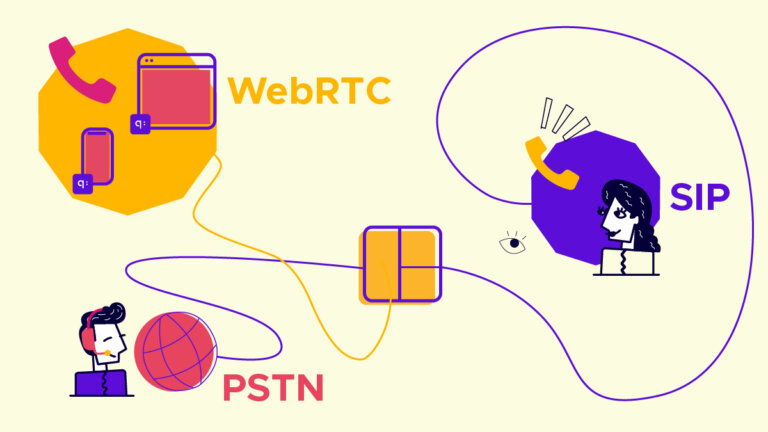
Partners and end customer ask very often about the different possibilities they have to integration WebRTC-based click to call buttons with their existing architecture. Most of them are willing to use the current platforms in order optimise agents time and existing metrics. And this is possible the WebRTC call is adapted to SIP so the legacy…
More than a year has passed, but the new release of Sippo is almost ready. Quobis was involved on some important projects where we learned and improve our product. Now all these features and technology improves are ready to be exploited by our partners. After go a little more in detail about each aspect of…
As with Microsoft Teams, Zoom has a voice traffic-oriented collaboration tool called Zoom Phone, which complements Zoom Meetings and Rooms, which became so popular in the midst of the pandemic. UCaaS models are becoming established as a way to have greater flexibility and scalability. With Zoom’s Bring Your Own Carrier (BYOC) feature , current PSTN…
(these are not hyperties, just “pasteis de natas”, the national pastry of Portugal) by yudani.riobo | Another reTHINK meeting was held two weeks ago in Aveiro (Portugal) at Portugal Telecom premises. It was a good opportunity to follow up the first eight months of project and to forge the lines of work to achieve its goal….
At MWC we had the opportunity to explain how Sippo is leveraging customer care in enterprises. Sippo Click to Call enables a web phone in existing web sites that allows not only to make a voice or video call with the call center of the company. Using this tool you can share your screen, allowing…
by iago.soto | Traditionally, real time communications had a social and strong verbal character. In the case of business communication, it was used to exchange information that sometimes needed to be sent after the conversation (like in the case of sending an email with notes or follow-up after a call). This means that communication domains and the context…