

Review of our participation at FP7 Icarus project
yudani.riobo | During this first semester Quobis completed its participation in the FP7 ICARUS project. Our tasks were focused on the development of a communication network to allow interoperability between the robotic vehicles and the control center.
After the earthquakes in l’Aquila, Haiti and Japan, the European Commission confirmed that there is a large discrepancy between robotic technology which is developed in laboratory and the use of such technology on the terrain for search and rescue operations and crisis management.
Thus, the European Commission’s Directorate-General for Enterprise and Industry decided to fund ICARUS, a Research project with a global budget of 17.5M€ which aimed to develop robotic tools which could assist human crisis intervention teams.
ICARUS concentrated on the development of unmanned search and rescue technologies for detecting, locating and rescuing humans, aiming to bridge the gap between the research community and end-users, by developing a toolbox of integrated components for unmanned search and rescue.
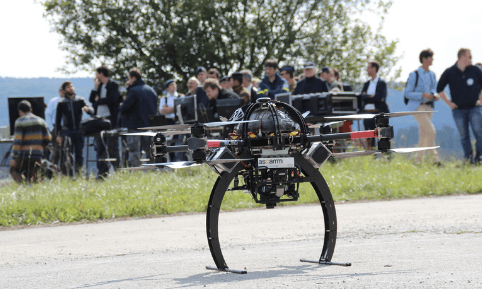
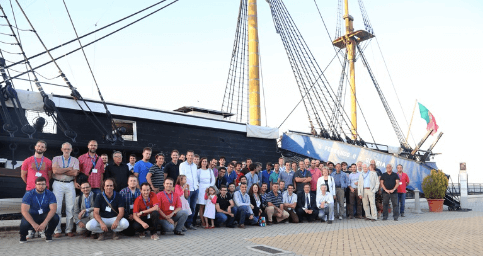
The results of the project were successfully during the final demonstrations. For the sea scenario, ICARUS project partners simulated a maritime crisis scenario at the Navy Base of Alfeite in Portugal. The demonstration showcased how unmanned surface vehicles and unmanned aerial vehicles – linked together in a shared robotic network provided by Quobis, Integrasys and RMA – can assist “human” search and rescue teams in maritime incidents, such as the sinking of a large ferry boat or a cruise ship.
The final field trials of the robotic tools developed within the project took place on the training grounds of the Belgian First Aid and Support Team in Marche-en-Famenne, Belgium. The purpose of the demonstration was to validate the different tools developed by the project partners in a real-life land use case scenario. An earthquake similar to the one in Haiti was simulated to showcase how the robotic tools can assist search and rescue teams.
If it uses to be a pleasure for us to work on successful projects, the satisfaction of having worked on ICARUS project is still greater because of the importance of the results in the search and rescue field.
More detailed information about ICARUS project, its results and partners involved is available here.